



Technology Modernization Perspectives — Part 3 of 4
Data modernization is not a single project with a start date and an end date. It is a structured progression through five distinct capability stages, each of which builds on the previous and creates the foundation for what follows. Organizations that attempt to shortcut this sequence — implementing analytics before data quality is established, or automating workflows before digitization is complete — consistently underperform those that move through the stages with discipline.
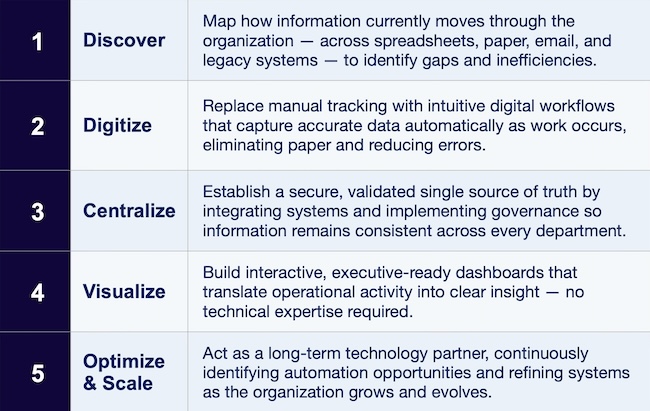
Each stage of this journey produces tangible business value on its own. Taken together, they constitute a transformation from an organization that manages by memory to one that competes by intelligence.
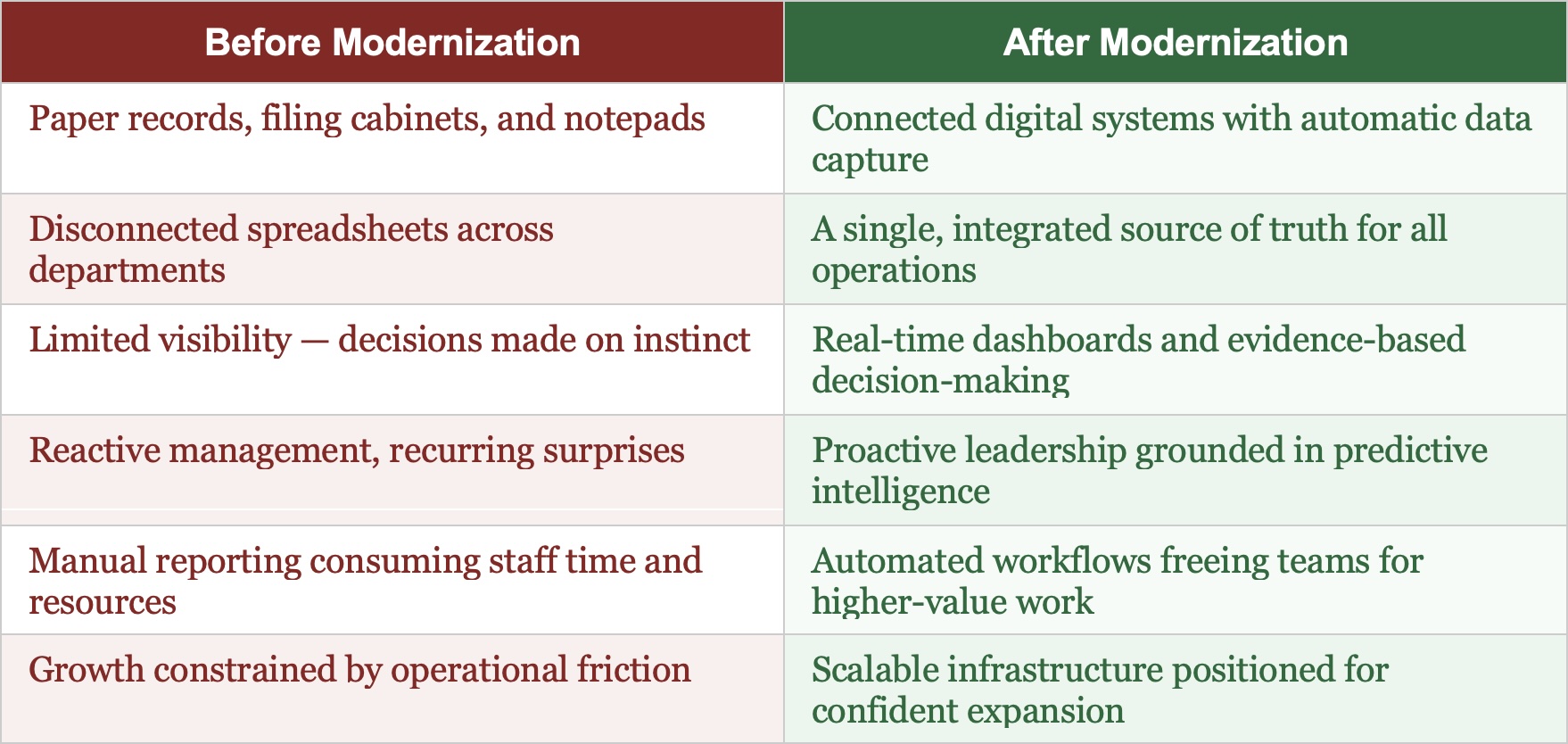
The Operational Shift at a Glance
You Do Not Need an Internal Technical Team to Compete at a Modern Level
One of the most persistent misconceptions about data modernization is that it requires a sophisticated internal technology function — a team of data engineers, business intelligence developers, and data scientists operating in-house. For large enterprises, that may be true. For small and mid-sized businesses, it is not.

The expertise required to design a data architecture, build integrations between operational systems, implement data governance, and develop meaningful analytics is real. But it does not need to live inside your organization permanently. What your organization needs is access to that expertise when it matters most — during the design and implementation of your modernization program, and on an ongoing basis as your business evolves and your data needs grow more sophisticated.
This is precisely the model that effective advisory and implementation partnerships deliver. Your modernization partner provides the strategy, the architecture, the implementation, and the ongoing optimization. Your internal teams do what they do best: run the business, serve customers, and make the decisions that a well-governed data environment makes significantly more reliable.
The goal is not to turn your operations team into data scientists. The goal is to give your operations team the visibility that makes every decision they already make more accurate and more confident.

The practical implication is that organizations which have historically assumed data modernization was beyond their reach — too expensive, too complex, too dependent on internal talent they could not afford — should revisit that assumption. The barriers to entry have fallen considerably. The tools are more accessible. The implementation approaches are more refined. And the business case, measured in the operational savings, revenue opportunities, and competitive advantages that modern data visibility creates, has never been more compelling.
Data Modernization transforms hidden business data into actionable intelligence companies can use to dominate competitors.
Don't miss our next installment:
Data Modernization—Why The Timing Has Never Been More Consequential
Ready to hear more? Contact our sales team today.